Concrete vs. Pavers: The Core Differences
When you're planning a new driveway or patio project in Columbia, one of the biggest decisions you'll face is whether to go with concrete or pavers. Both options have earned their place in South Carolina homes, but they work very differently. Understanding those differences is the first step toward making a choice that fits your budget, lifestyle, and aesthetic goals.
Concrete Driveways are poured as a single, continuous surface. A contractor prepares the base, sets up forms, and pours liquid concrete mix that hardens into one solid slab. Pavers, by contrast, are individual units (typically made from concrete, brick, or stone) that are laid side by side on a prepared base. This fundamental difference in installation affects everything from how they age, how they're repaired, and how much they cost over time. Neither option is universally "better", it depends on your priorities and the specific conditions of your property.
Durability and Longevity: Which Lasts Longer
Both concrete and pavers can last for decades when properly installed and maintained, but they fail in different ways. A well-constructed concrete driveway typically lasts 25 to 40 years in the Columbia climate. The main threat is the freeze-thaw cycle during winter months, which can cause cracking and spalling. South Carolina winters are relatively mild, which actually works in concrete's favor compared to northern states. However, heavy truck traffic, poor drainage, and the region's occasional freeze-thaw events can accelerate wear.
Pavers generally last just as long, often 25 to 50 years or more, but they degrade differently. Individual pavers can crack or chip, and when they do, you simply replace that one unit rather than dealing with the entire surface. The sand and gravel base underneath can shift over time, especially in areas with poor drainage or heavy use, which may cause pavers to settle unevenly. This can create a bumpy surface or allow water to pool in low spots. The trade-off is flexibility: you can always pull up a few pavers to fix drainage issues or refresh the look without starting over.
Maintenance Requirements: What You'll Actually Do
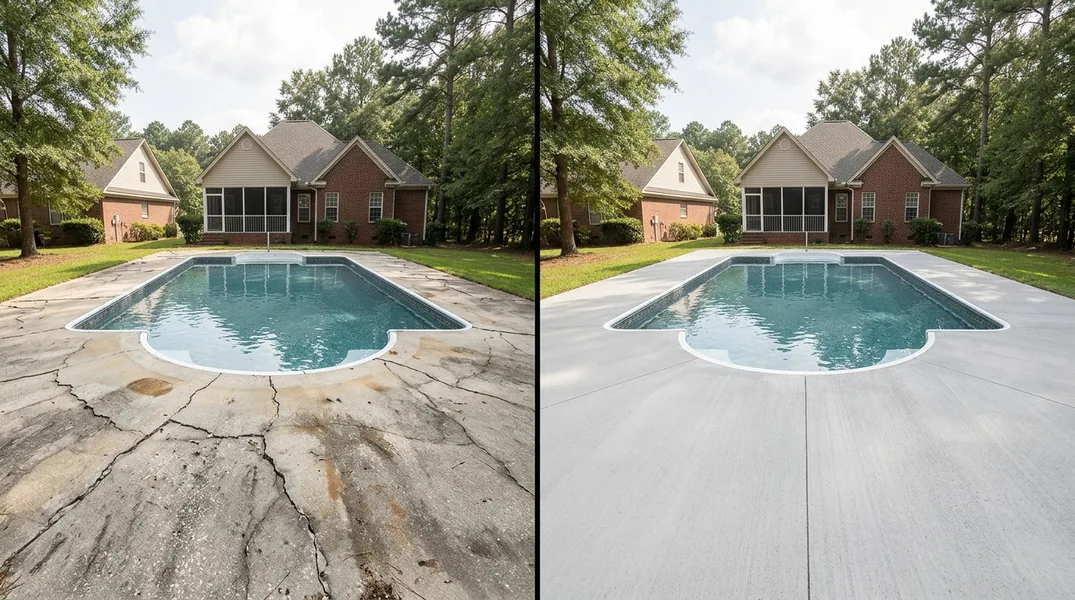
Concrete requires relatively straightforward maintenance. You'll want to seal your concrete every 2 to 3 years to protect it from moisture, UV rays, and chemical damage. Concrete driveways should be swept regularly and cleaned occasionally with a pressure washer. If small cracks appear, they should be filled promptly to prevent water from seeping in and expanding the damage. For more serious issues like large cracks or surface deterioration, Concrete Repair & Resurfacing services can extend the life of your investment significantly.
Pavers demand more hands-on attention. You'll need to sweep them regularly and wash them to prevent moss and algae growth, which can be slippery and unsightly in humid climates like South Carolina. The joints between pavers should be topped with sand annually, and you may need to re-sand or re-level sections over time. Weeds can grow through the joints, requiring periodic weeding or herbicide application. If you find this level of maintenance appealing because it keeps your outdoor space looking fresh, pavers may suit you. If you prefer a lower-maintenance option, concrete is the winner here.
Cost Comparison: Concrete vs. Pavers Installation and Long-Term Value
When comparing pricing for concrete versus pavers, the initial installation cost is often the deciding factor for many homeowners. Concrete is generally less expensive upfront, typically ranging from $3 to $8 per square foot for a standard poured driveway, depending on the size, site conditions, and local labor rates. Pavers usually cost more at the outset, generally $8 to $16 per square foot or higher, because each unit must be individually placed and the installation process is more labor-intensive. For a 500-square-foot driveway, that could mean a difference of several thousand dollars.
However, the long-term cost picture is more complex. Concrete may require periodic sealing and occasional repairs, while pavers need more frequent maintenance but offer easier spot repairs. If you need to replace a damaged section of concrete, you may have to remove and re-pour a large area, which is expensive. With pavers, you replace just the damaged units. Over 30 years, these maintenance differences can add up. Additionally, if you ever want to update the look of your patio or driveway, pavers offer more flexibility since you can mix colors or patterns, while concrete is typically a one-color, one-texture investment. To get an accurate free estimate for your specific project, contact Columbia Concrete at (803) 830-4186.
Aesthetic Options: Creating the Look You Want
Concrete doesn't have to be plain gray and boring. Today's concrete options include Stamped & Decorative Concrete, which can mimic the appearance of brick, stone, or tile. You can also add color with integral dyes or surface stains, creating everything from rustic earth tones to bold contemporary hues. Decorative concrete allows you to achieve a high-end look at a fraction of the cost of natural materials, and it's still easier to maintain than pavers.
Pavers offer unmatched variety in terms of color, texture, and pattern options. You can choose from traditional clay brick, modern concrete pavers in dozens of colors, or natural stone like bluestone or granite. The ability to mix and match colors and create intricate patterns makes pavers ideal if you want a truly custom, designer look. Concrete Patios with pavers can become a stunning focal point of your outdoor living space, especially in West Columbia and surrounding areas where outdoor entertaining is popular. If aesthetics are your top priority and you're willing to invest in higher maintenance, pavers might be worth the extra cost.
Climate Considerations for Columbia Homeowners
South Carolina's climate is a crucial factor in this decision. Columbia experiences hot, humid summers and mild winters, with occasional freezing temperatures and ice. This means both concrete and pavers face challenges from moisture and the occasional freeze-thaw cycle, but neither faces the extreme conditions that northern homeowners deal with. Concrete in this climate is generally very stable, though proper drainage is essential to prevent pooling water and potential cracking. Pavers also perform well in Columbia's climate, though the high humidity can encourage moss and algae growth on the surface, making regular cleaning more important than it might be in drier regions.
One advantage of pavers in humid climates is that they allow water to drain through the joints rather than pooling on the surface. This can reduce standing water issues and is especially beneficial if your property has poor natural drainage. Concrete surfaces, by contrast, direct all water to the edges and must rely on proper grading and slope to shed water effectively. If your property has drainage challenges, pavers might be the smarter choice. For personalized advice based on your specific property and local conditions, the team at Columbia Concrete can assess your site and recommend the best option. Call (803) 830-4186 to discuss your project.
Looking for a professional concrete contractor in Columbia? Columbia Concrete responds fast for all your concrete needs.
Get a Free QuoteOur services: Concrete Driveways · Concrete Patios · Stamped & Decorative Concrete